It is one of the best consulting firms available and they are genuinely committed to assisting the students. The counselors are very approachable.

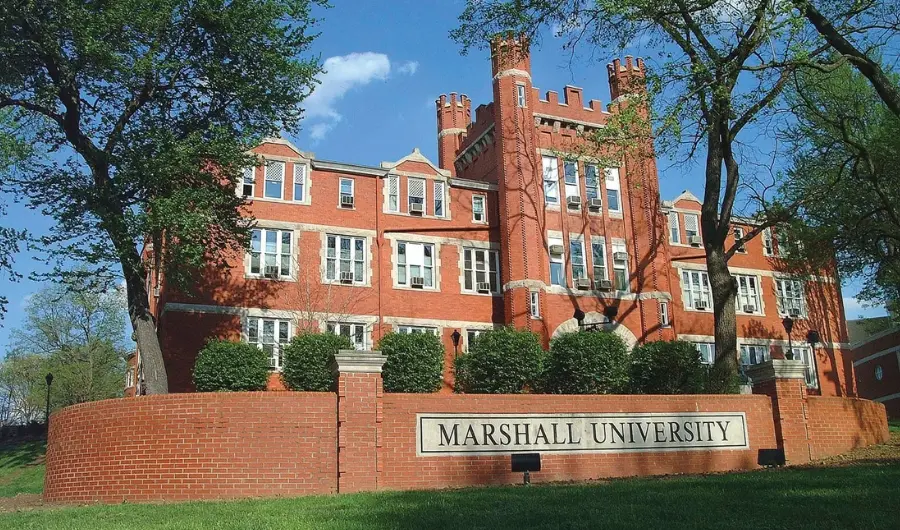
Marshall University is a coeducational public research university in Huntington, West Virginia, United States, founded in 1837, and named after John Marshall, the fourth Chief Justice of the United States. Mission: Marshall University is a multi-campus public university providing innovative undergraduate and graduate education that contributes to the development of society and the individual. The University actively facilitates learning through the preservation, discovery, synthesis, and dissemination of knowledge. A historic public university located in downtown Huntington with additional campuses and centers in South Charleston, Point Pleasant, and Teays Valley. Accredited by:Higher Learning Commission of the North Central Association Research Funding: More than $50 million annually Alumni: 100,805 Athletics: NCAA Division I, Conference USA Mascot: Marco the Bison Nickname: The Thundering Herd School Colors: Kelly Green and White.
Students attending Marshall can choose from 2 associate programs, 44 baccalaureate programs and 46 graduate programs.
Location & Facilities
Marshall University has a non-residential branch campus, focused on graduate education, in South Charleston, the Marshall University - South Charleston Campus, which also offers classes throughout the southern half of the state, including at the Erma Byrd Higher Education Center in Beckley.(FEPAC). It also offers undergraduate courses, under three "centers", the Southern Mountain Center, operating on the campuses of the Southern West Virginia Community College in Logan and Williamson and at the YMCA in Gilbert; the Mid-Ohio Valley Center in Point Pleasant and the Teays Valley Center in Hurricane.(FEPAC). Marshall University also operates the Robert C. Byrd Institute, with operations on both the Huntington and South Charleston campuses, as well as in Fairmont, West Virginia.(FEPAC). The institute's goal is to transfer of technology from the academic departments to private industry to support job development in the region.
CAMPUSLIFE- 230 recognized student organizations
Under this section details about the City & Campus need to be provided & also mention about the Accommodation Facilities & Other Facilities that are available to the students.
As committed as we are to providing you with the best educational experience possible, we are also dedicated to ensuring that cost is not a barrier to your education at Marshall. Marshall University offers a wide variety of merit-based scholarships and need-based financial aid programs to provide you with even greater value and affordability.
Merit Base Scholarships
Marshall University offers a variety of merit-based scholarships to students who demonstrate outstanding academic achievement.
Merit-based scholarship programs require that you be enrolled full time and maintain a minimum GPA. Only U.S. citizens and U.S. Permanent Resident Aliens qualify for Marshall University merit-based scholarship programs.
For incoming first-time freshmen and transfer students to obtain a quick estimate of your scholarship merit-based scholarship eligibility, use our 2015-16 Merit-based Scholarship Eligibility calculator at https://marshallscholarships.studentaidcalculator.com.
Most scholarships are renewable, but some are not. In order for you to continue receiving renewable scholarships, you must continue to meet the scholarship criteria as described in the messages in your Financial Aid Package in your myMU (MILO) account.
To download a copy of Marshall University Merit-based Scholarship policies, click on the link below.
2014-15 Marshall University Merit-based Scholarship Programs
Need Base Scholarship
The following financial aid programs are available to students who demonstrate financial need and in some cases meet other criteria.
Federal Pell Grant (up to $5,775) – awarded to undergraduates who have not earned a bachelor’s degree and who have exceptional financial need. Undergraduates taking 3 or more credits may receive Federal Pell Grant. Beginning July 1, 2012, the maximum life-time number of semesters or equivalent the student may receive Federal Pell Grant is 12 semesters.
Federal Supplemental Educational Opportunity Grant (SEOG)– awarded to Federal Pell Grant eligible undergraduates pursing their first bachelor’s degree. Federal SEOG is available to undergraduates who take 3 or more credits. Students with exceptional financial need, equated with a zero Expected Family Contribution (EFC) as indicated on the student’s Student Aid Report (SAR) are considered first. Because Federal SEOG funding is limited, priority is given to applicants meeting the March 1 FAFSA filing deadline.
WV Higher Education Grant (up to $2,600 per academic year) – Recipients must be U.S. citizens, WV residents (student and parents) for 12 months immediately preceding March 1 prior to the academic year. Students receiving WV Higher Education Grant must demonstrate financial need, enroll full time and maintain a minimum 2.0 grade point average (GPA). In addition, students must earn a minimum of 24 credit hours to renew the grant. The maximum number of semesters or equivalent the student may receive WV Higher Education Grant is 8 semesters (or 4 years). Students must file the FAFSA by April 15 prior to the academic year the student plans to enroll.
WV Higher Education Adult Part-Time Student (HEAPS) Grant ($650 – $1950 per academic year) – awarded to part-time WV residents (resident for a minimum of 12 months) who demonstrate financial need and maintain a 2.0 grade point average. Funding for this program is limited; therefore, all part-time WV students who qualify will be considered to the extent of funding availability.
Loan Programs
Many students must rely on educational loans to cover at least some portion of their educational costs. Educational loans are available to undergraduate and graduate students as well as parents of undergraduate students.
When you file the FAFSA, the Office of Student Financial Assistance automatically considers your eligibility for the Federal Perkins Loan and Federal Direct Loan. However, for other loan programs, you will have to take additional steps or meet certain criteria for consideration.
Student loan borrowing is an investment in your future. When deciding to borrow, it is very important that you obtain the best possible loans available to you in terms of interest rates and repayment options. The Office of Student Financial Assistance will always offer you the best educational loans available and your maximum student loan eligibility. However, you should only consider borrowing only an amount that you absolutely need to keep your loan indebtedness as low as possible. Remember that you have to repay these funds at a later time and will want to have a modest loan repayment amount when that time comes.
Below is information on various loan programs available to Marshall University students:
Indian students keen on applying to the Marshall University can streamline the application process by visiting their nearest Edwise International branch office. Edwise, an official advisor on overseas education provides one-on-one guidance throughout the process, right from application requirements and deadlines to scholarship possibilities and visa support. Our team of experienced counselors can help you acquire a thorough understanding of the Marshall University's admission procedure, necessary documentation, and guidelines for submitting an impressive application. Whether you're applying for undergraduate, graduate, or professional programs, visiting an Edwise office guarantees a seamless, knowledgeable, and well-supported journey to studying at one of the top universities in USA.
The USA is home to the highest number of top ranked universities in the world making it an ideal study abroad destination for international students. Some of the top universities in the USA include Harvard University, Massachusetts Institute of Technology (MIT), Stanford University, University of California, Berkeley, and Princeton University.
Yes, the cost of studying in USA can be significantly reduced with the help of financial assistance if they match the eligibility criteria, such as good test scores, excellent academic records, and other criteria set by the universities.
The acceptance rates of the top ten universities are 1–4%. It is advised to apply to other universities as well. As one of the top USA education consultants, we will help ensure that you apply to the best universities providing the highest quality education.
While TOEFL is generally more commonly accepted by universities in the USA, many universities also accept IELTS as proof of English language proficiency.
Yes, many universities do accept 15 years of education with or without work experiences directly for an MBA. However, few do require 16 years of education.

It is one of the best consulting firms available and they are genuinely committed to assisting the students. The counselors are very approachable.

Edwise was the first consultancy I contacted before trying a few other consultancies on my own. Their services are unmatched.


It was a wonderful and impactful experience from the start with Edwise. The quality of work provided by them really helped me in my applications.
