Edwise does not stop at admissions. Their ongoing support post-study helped me transition smoothly into my career. The best decision for my academic journey!

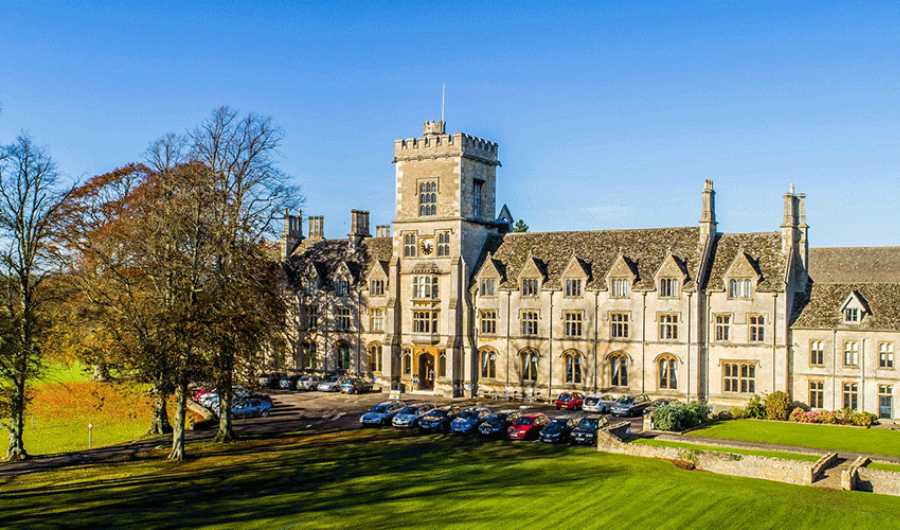
The Royal Agricultural University, originally founded as the Royal Agricultural College in 1845, holds the distinction of being the first agricultural college in the English-speaking world, later receiving its royal charter. Located in Cirencester in the Cotswolds, about 90 minutes from London, the RAU is often referred to as the “Oxbridge of the Countryside.” Throughout its history, the university has maintained a strong legacy in applied agricultural education, combining practical training with academic rigour and evolving over nearly two centuries to remain a leading specialist institution.
Academically, the RAU delivers flagship programmes such as the BSc (Hons) Agriculture, which spans three years and integrates four core pillars: Technology & Innovation, Environmental Sustainability, Business & Enterprise, and Employability & Leadership. Its curriculum emphasizes industry-aligned learning, research-informed teaching, hands-on farm experience, and second-year work placements—designed to prepare graduates for roles as farm managers, consultants, agronomists, researchers, and rural entrepreneurs. The university also offers a diverse suite of postgraduate master’s degrees, including Sustainable Agriculture & Food Security, Rural Estate Management, Agricultural Technology & Innovation, Business Management, and more, all taught within a campus environment dedicated to land-based education.
Beyond academics, RAU operates 491 hectares of farmland across Coates Manor Farm and Fossehill Farm, featuring facilities like the John Oldacre Rural Innovation Centre for vocational training and student-led applied research. Its research priorities focus on sustainable agriculture, food security, livestock welfare, and rural land management, often informing national policy and industry best practices. Though modest in size—about 1,100 students—RAU fosters a close-knit community with strong pastoral support, yet feedback suggests its rural location and student demographic contribute to a distinctive social environment, sometimes perceived as less diverse and characteristic of countryside traditions.
Undergraduate students (UK and international) holding an offer to study at RAU may receive one of two automatic bursaries: Stream 1 (around £1,000 per year) or Stream 2 (around £3,500 per year), awarded for up to three years based on assessed financial need or personal background. In addition, several competitive awards are available, typically with an application deadline in June. These include the RAU Next Generation Scholarship (£6,000 per year for eligible UK ethnic minority students), RAU Sports Scholarships (up to £4,000 per year for athletes competing at national or international level), the MacRobert Forces Scholarship (£1,000), and the Sir Emrys Jones Memorial Trust Award (up to £2,000 for students with Welsh connections).
For postgraduate taught students, the primary scholarship is the Vice-Chancellor’s International Scholarship, which provides up to 20% off tuition fees for one year and is open to international students enrolling in MSc, PGDip, or MBA programmes. Successful applicants are usually notified within two weeks of submitting their course application. UK postgraduate students may be eligible for the Clyde Higgs Postgraduate Scholarship, worth £5,000, aimed at students from land-based or rural backgrounds. RAU alumni are also eligible for a 20% tuition fee discount on postgraduate degrees, which is automatically applied upon admission.
RAU also supports a range of external scholarships and bursaries available to both undergraduates and postgraduates. Notable examples include the 1st Formations Business Scholarship (offering up to £500), Snowdon Trust grants (up to £5,000 for students with disabilities), and the Education Future International Scholarship for Indian nationals (worth between ₹2–10 lakh). Further opportunities include awards from organisations such as the BASC, the John Innes Foundation bursary (£9,250 per year for eligible UK students), and NFU Mutual bursaries, which can cover up to 75% of tuition fees for postgraduate students focusing on agricultural studies.
Indian students keen on applying to the Royal Agricultural University can streamline the application process by visiting their nearest Edwise International branch office. Edwise, an official advisor on overseas education provides one-on-one guidance throughout the process, right from application requirements and deadlines to scholarship possibilities and visa support. Our team of experienced counselors can help you acquire a thorough understanding of the Royal Agricultural University's admission procedure, necessary documentation, and guidelines for submitting an impressive application. Whether you're applying for undergraduate, graduate, or professional programs, visiting an Edwise office guarantees a seamless, knowledgeable, and well-supported journey to studying at one of the top private research universities in UK.
The cost of studying in the UK varies depending on the university and selection of the course. You can see the detailed cost break down in the cost section above.
Yes, some universities do offer a waiver and some universities also accept PTE and TOEFL.
The top universities in the UK for Indian students include Oxford, Cambridge, and Imperial College London, among many others.
The required bank balance for a UK student visa in Inner London is 12 Lakhs, while in Outer London, it is 9 Lakhs. Additionally, you must show a balance payment for the remaining tuition fees.
You can get in touch with Edwise's expert counselors who after reviewing your profile, would be in a better position to guide you according to your specific needs. As the premier study in UK consultants we guarantee a smooth and seamless process if you choose to study in the UK.
To study in UK from India, students can apply to universities in UK via the UCAS (Universities and Colleges Admissions Service) system, which handles undergraduate applications. They are required to compile academic transcripts, draft a personal statement, and fulfill English language prerequisites, and submit their application online prior to the deadlines.
Business and Management, Medicine, Social Sciences, Engineering, and Computer Science are the popular courses to study abroad in UK. Owing to renowned academic standings and employment opportunities, a number of overseas students are drawn to these fields.
Applying for a UK student visa from India requires students to have a Confirmation of Acceptance for Studies (CAS) from an educational institution in the UK, provide evidence of adequate funds to pay for tuition fees and living expenses, and proof of English language competence. They are also required to submit biometric information and provide a valid passport.
Yes, study in UK for Indian students permits them to work part-time for a maximum of 20 hours per week during the academic term and full-time during breaks, based on their visa conditions.
Yes, a Post-Study Work visa known as the Graduate Route is offered by the UK, enabling overseas graduates to work or seek employment for a maximum of 2-3 years post the completion of their degree.

Edwise does not stop at admissions. Their ongoing support post-study helped me transition smoothly into my career. The best decision for my academic journey!

Edwise was extremely helpful in selecting the course, preparing my documents, & finishing all the paper work. Thank you Edwise for guiding me.


My interactions with Edwise has been completely fulfilling and satisfying. I thank my lucky stars that I came across this excellent consultancy.
